

Data Centers and AI Infrustructure
Hyperscale & Cloud
-
Hyperscale and Cloud Campus
-
Turnkey Data Centers
-
Build-to-Suit
-
Powered Shell and Dark Shell
-
Nuclear-Powered Campus Facilities
Colocation & Carrier
-
Colocation (Retail and Wholesale)
-
Carrier Hotels
-
Carrier-Neutral and Internet Exchange
-
Internet Gateways and Switching
-
Mission Critical Tech Office
Enterprise & Edge
-
Mission Critical Data Centers
-
Enterprise and Owner-Occupied
-
Disaster Recovery and Business Continuity
-
Modular and Containerized Facilities
-
Bitcoin and Crypto Mining
Technology Generations
-
Gen 1: Legacy and Converted
-
Gen 2: Early Purpose-Built
-
Gen 3: Modern Colocation (Tier III)
-
Gen 4: Hyperscale and Cloud (Tier IV)
-
Gen 5: AI, GPU and Liquid-Cooled
AI & Next Generation
-
AI and GPU Training Clusters
-
Liquid and Immersion-Cooled Facilities
-
High-Density Power Infrastructure
-
Edge and Metro Facilities
-
Next-Gen Energy-Sourced Facilities
The assessor's model was not built for a sector that trades in kilowatts
VALUATION APPROACH
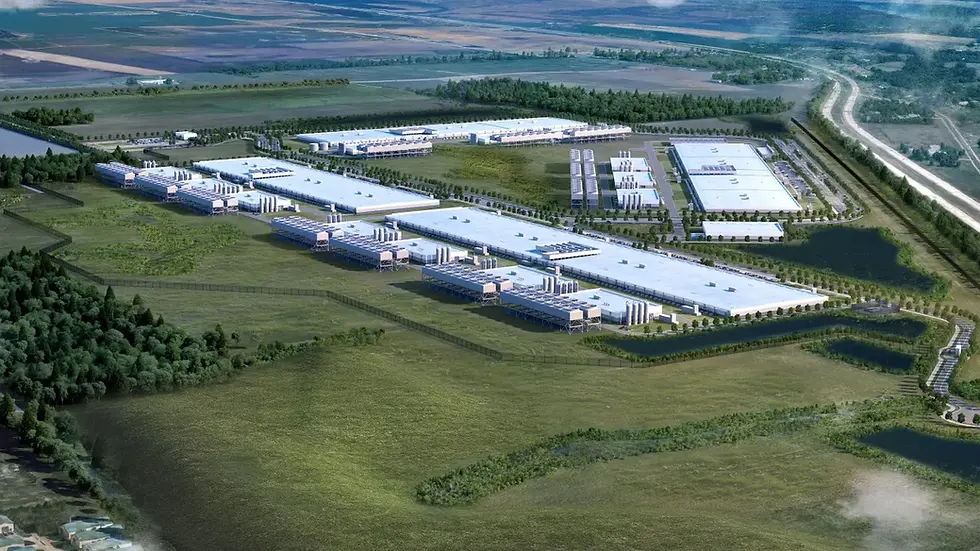
Data centers are in one of the most dramatic repricing cycles in commercial real estate history. Hyperscale demand has pushed land and construction costs into new territory, but legacy facilities, partially leased campuses, and assets caught between technology generations face a valuation reality most assessors do not understand. Vacant land gets treated as fully powered and leased. Replacement cost gets applied to facilities the market has long since repriced. Functional obsolescence driven by power density limitations, cooling constraints, and the shift from retail colocation to hyperscale net lease goes unrecognized entirely.
The foundational error is methodology. Data centers are not valued in dollars per square foot. The market prices mission critical facilities in dollars per kilowatt of critical IT load, a metric that accounts for power density, redundancy architecture, cooling capacity, and the economic relationship between the facility and its tenants. Every technology generation carries distinct valuation characteristics. A Generation 1 converted carrier hotel and a Generation 5 liquid-cooled AI GPU cluster are not comparable assets and should never be assessed as if they were.
For business personal property, servers, cooling systems, UPS infrastructure, and GPU hardware are routinely over-depreciated or misclassified as real property. Both errors are correctable and both are common across every major data center market in the country.
For older Generation 1 and Generation 2 facilities, highest and best use analysis has become one of the most consequential arguments available. Where server density has contracted, HVAC systems are cost-prohibitive to upgrade, and the capital required to reposition the asset to meet current tenant requirements exceeds the stabilized value of the repositioned building, assessed value resets to at or below land value. The improvement has no positive contributory value. That is not a theoretical position. It is a market conclusion supported by current construction costs, leasing market evidence, and the economics of a building the market has functionally retired
OUR EXPERTISE
Data center valuation since 1999, through every technology and capital market cycle. Enterprise users, colocation owners, edge providers, carrier-neutral facilities, internet gateways, switching facilities, and the largest hyperscale operators are all in the client base. Mission critical facilities across every Uptime Institute Tier III and Tier IV certification. Bitcoin and crypto mining operations. Modular and containerized deployments. Build-to-suit campuses and powered shell developments at every stage of the lease-up cycle.
The operational, mechanical, financial, and regulatory considerations that determine how this sector prices are understood from the inside, not approximated from the outside. The track record includes some of the lowest assessed values achieved on the most expensive mission critical facilities in their respective states and jurisdictions. When the assessor's model does not reflect how this sector actually trades, it gets dismantled with precision and defended at every level of appeal.
For legacy assets where highest and best use analysis supports a value at or below land, the argument is built with sourced redevelopment cost estimates, current market leasing evidence, and a clear-eyed analysis of what a willing buyer would actually pay for a building whose repositioning economics are upside down. This is among the most aggressive and most defensible positions available in data center property tax work today, and it is an argument very few advisors know how to make.
Between 2018 and 2024, Assembly was the only firm achieving meaningful reductions on data center assessments in New Jersey, resetting baselines to half of assessed value at a time when most advisors could not find comparable sales and walked away. The approach was not to wait for the market to move. It was to get under the hood: identifying early the shifting technology trends, emerging power constraints, and the structural impossibility of returning converted industrial buildings to their prior use. Truck turnaround capacity had been eliminated. Parking had been removed. Dock doors were gone. The cost to reconvert to industrial was insurmountable and that fact, documented precisely and argued at appeal, is what reset the baseline. The market caught up later. The reductions were delivered when it counted.